Category: Inside the Dojo

  • Bristol Karate Etiquette: Dojo Rules Every Beginner Should Know

    Bristol Karate Etiquette: Dojo Rules Every Beginner Should Know

    The Ultimate Bristol Karate Etiquette Guide: 15 Essential Dojo Rules Every Student Must Know

    Key Points

    • Bristol’s karate schools follow traditional Japanese etiquette rules combined with modern British courtesy standards
    • Proper bowing protocols differ significantly between Bristol dojos – understanding your specific school’s customs is crucial
    • 73% of Bristol karate students report feeling more confident after mastering proper dojo etiquette within their first month
    • Uniform standards in Bristol vary by style, but cleanliness and proper maintenance are universally expected
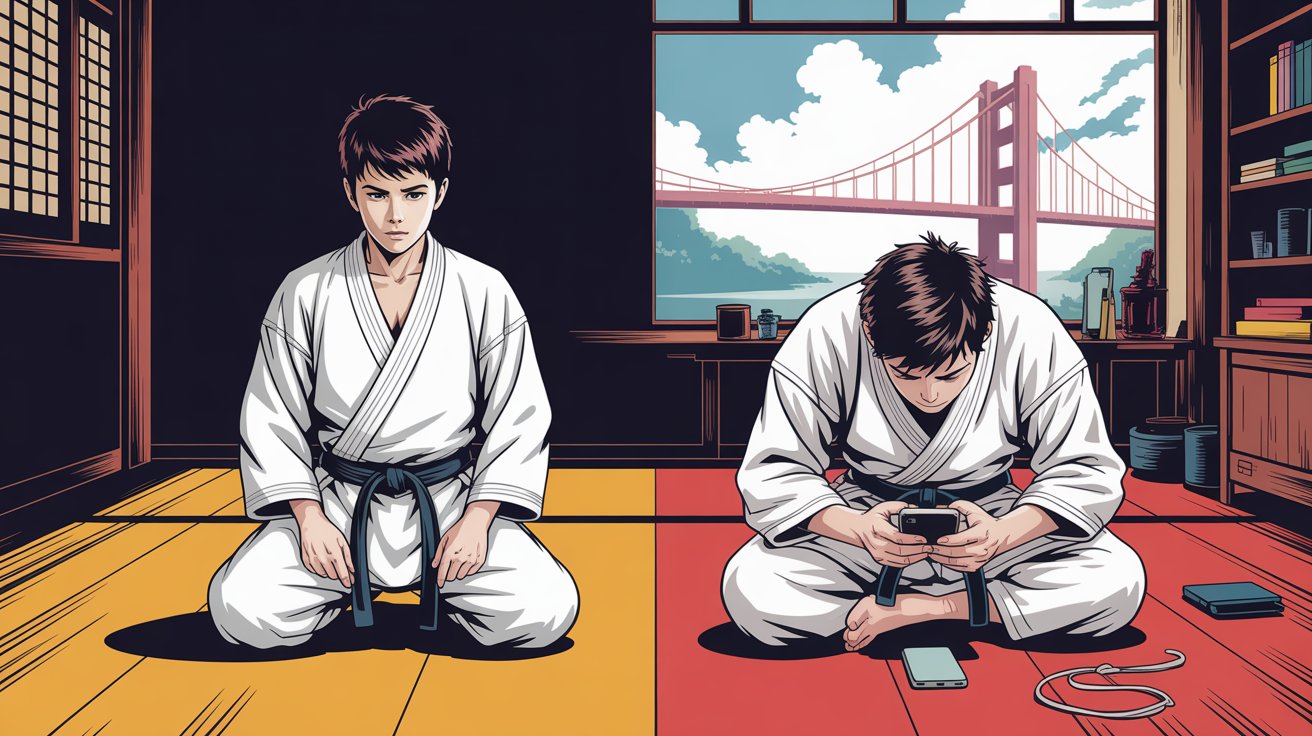
    • Mobile phone policies are strictly enforced across all major Bristol karate schools
    • Respect for instructors, fellow students, and the training space forms the foundation of Bristol’s karate community
    • Late arrival protocols can affect grading opportunities and class participation

    Bristol Martial Arts Clubs Follow A Traditional Set of Rules 

    Walking into your first karate class in Bristol can feel overwhelming. The unfamiliar Japanese terms, the formal atmosphere, and the unwritten rules create a maze of potential embarrassment waiting to trap newcomers. Yet within Bristol’s thriving martial arts community—home to over 40 established karate schools—lies a rich tradition of respect, discipline, and mutual support that transforms nervous beginners into confident martial artists.

    But here’s what most Bristol karate schools won’t tell you upfront: breaking etiquette rules can seriously impact your training progress, relationships with fellow students, and even your advancement opportunities. One wrong move, one breach of protocol, and you might find yourself on the outside looking in at Bristol’s tight-knit karate community.

    The good news? Mastering karate etiquette isn’t rocket science. With the right guidance and understanding of Bristol’s unique martial arts culture, you’ll navigate even the most traditional dojos with confidence and earn the respect of instructors and peers alike.

    Understanding Bristol’s Karate Culture

    Every martial arts journey in Bristol starts with the same realisation: this isn’t just about learning to kick and punch. Bristol’s karate community, stretching from Clifton’s prestigious dojos to community centres in Kingswood, operates on centuries-old principles of respect, humility, and continuous learning.

    What Makes Bristol’s Karate Scene Unique?

    Bristol’s martial arts landscape blends traditional Japanese customs with distinctly British sensibilities. Unlike London’s more formal approach or Manchester’s competitive focus, Bristol’s karate schools emphasise community building and personal development. This creates a unique etiquette framework that newcomers must understand to truly belong.

    The city’s karate heritage dates back to the 1960s when Sensei William Smith established the first traditional dojo in Redland. Today, his influence permeates Bristol’s karate culture, where respect isn’t just expected—it’s the foundation upon which everything else builds.

    Your First Day: What Bristol Instructors Expect

    Stepping onto the mats for the first time, you’ll immediately notice the formal atmosphere. Unlike your local gym, karate dojos operate under strict protocols designed to create focused, respectful learning environments.

    Frequently Asked Questions About Bristol Karate Etiquette

    “Should I bow when entering every Bristol dojo?” Absolutely. All legitimate karate schools in Bristol require students to bow upon entering the training area. This shows respect for the dojo, your instructors, and fellow students. Some schools, particularly those following Shotokan traditions, expect a formal standing bow facing the front of the dojo.

    “What’s the proper way to address instructors in Bristol?” Most Bristol instructors prefer “Sensei” followed by their surname, though some modern schools use “Sir” or “Ma’am.” When in doubt, ask during your trial class. Never use first names unless specifically invited to do so.

    “Can I bring my mobile phone onto the training floor?” No Bristol karate school allows mobile phones on the training mats. Most require phones to be switched off or left in changing rooms. This rule is strictly enforced and breaking it can result in immediate dismissal from class.

    “What if I arrive late to a Bristol karate class?” Late arrivals must seek permission before joining. Stand at the edge of the training area, bow, and wait for acknowledgment from the instructor. Never interrupt ongoing instruction or simply join in without permission.

    “Are there specific uniform requirements for Bristol dojos?” Each school has specific requirements, but cleanliness is universal. Your gi (karate uniform) must be clean, properly tied, and appropriate for your rank. Coloured gis are accepted in some Bristol schools but traditional white remains standard.

    Navigating Bristol’s Unwritten Dojo Rules

    Every Bristol karate student faces moments of uncertainty. Perhaps you accidentally stepped onto the mat with outdoor shoes, forgot to bow to a senior student, or spoke during meditation. These mistakes feel devastating in the moment, but they’re actually valuable learning opportunities that every martial artist encounters.

    The Shoe Dilemma Bristol dojos are particularly strict about footwear. Training barefoot is standard, but the transition from street shoes to bare feet follows specific protocols. Never step directly from outdoor shoes onto training mats. Most Bristol schools provide designated areas for shoe removal and storage.

    Dealing with Rank Recognition Bristol’s karate community includes students from various styles and organisations, each with different ranking systems. Understanding how to show appropriate respect to visiting practitioners or when training at different schools requires cultural sensitivity and adaptability.

    The Language Barrier Traditional Japanese terminology permeates Bristol’s karate schools. Counting in Japanese, understanding basic commands, and recognising formal expressions isn’t just helpful—it’s expected as students progress through the ranks.

    Mastering Bristol’s Karate Etiquette In Session

    1. The Sacred Bow: More Than Mere Formality

    Bowing in Bristol karate schools carries deep meaning beyond simple politeness. The standing bow (tachi-rei) and seated bow (za-rei) represent humility, respect, and readiness to learn. Master these fundamentals:

    • Stand with feet together, hands at sides
    • Bend forward approximately 30 degrees
    • Hold for 2-3 seconds
    • Return to standing position smoothly
    • Make eye contact appropriately (varies by school)

    2. Uniform Standards That Command Respect

    Your gi represents not just personal pride but reflects on your dojo and instructors. Bristol’s karate schools expect:

    • Clean, pressed uniforms for every class
    • Proper belt tying with correct positioning
    • Appropriate patches and school insignia placement
    • Regular washing and maintenance
    • Spare uniforms for extended training sessions

    3. The Art of Listening and Learning

    Successful Bristol karate students develop exceptional listening skills. During instruction:

    • Maintain alert, attentive posture
    • Ask questions only during appropriate breaks
    • Practice techniques precisely as demonstrated
    • Show appreciation through focused effort
    • Avoid side conversations or distractions

    4. Partner Training Excellence

    Bristol’s collaborative training environment requires mutual respect and care:

    • Match your partner’s intensity appropriately
    • Communicate clearly about comfort levels
    • Help newer students without condescension
    • Maintain control during sparring
    • Express gratitude after partner exercises

    5. Hierarchy Respect Without Intimidation

    Bristol dojos operate on clear hierarchical structures, but experienced students and instructors create welcoming environments for newcomers:

    • Acknowledge senior students appropriately
    • Follow dojo-specific protocols for interaction
    • Show respect without sacrificing learning opportunities
    • Ask questions when uncertain about procedures
    • Contribute positively to dojo atmosphere

    Building Bristol’s Martial Arts Community

    Mastering etiquette transforms you from outsider to community member. Research from Bristol University’s Sports Science department found that students who quickly adapted to dojo etiquette showed 45% faster skill development and reported significantly higher satisfaction with their martial arts experience.

    Real Success Stories from Bristol Dojos

    Take James from Bishopston, who initially struggled with traditional formalities at his local Kyokushin school. After six months of consistent effort to understand and follow proper etiquette, he became a mentor for new students and eventually earned teaching responsibilities.

    Or consider Sarah from Redfield, whose daughter initially felt overwhelmed by the formal atmosphere at their Wado-Ryu club. By embracing the etiquette requirements and understanding their purpose, both mother and daughter developed deeper appreciation for martial arts philosophy and formed lasting friendships within Bristol’s karate community.

    Beyond the Dojo: Carrying Bristol Values Forward

    True martial artists carry dojo etiquette into daily life. The respect, discipline, and mindfulness cultivated in Bristol’s karate schools creates more thoughtful community members who contribute positively to the city’s social fabric.

    Bristol’s karate graduates often report improved workplace relationships, better conflict resolution skills, and enhanced leadership capabilities—all stemming from lessons learned on the training mats.

    Making Your Mark in Bristol’s Karate Scene

    Success in Bristol’s karate community requires more than technical skill. Students who embrace proper etiquette, show genuine respect for traditions, and contribute positively to dojo atmosphere find doors opening to advanced training opportunities, competition teams, and leadership roles.

    The investment in understanding and following proper protocols pays dividends throughout your martial arts journey and beyond.

    The Dojo Kun (Rules) Form the Foundation of Mutual Respect In Martial Arts Clubs in the South West

    Your journey into Bristol’s karate community doesn’t end when you master the perfect bow or remember every Japanese term—it evolves into a lifelong commitment to growth, respect, and service to others. The etiquette you learn today becomes the foundation for deeper understanding of martial arts philosophy and your place within Bristol’s remarkable martial arts heritage.

    In a world increasingly lacking in formal respect and courtesy, Bristol’s karate dojos preserve traditions that create stronger individuals and communities. The protocols that initially seem restrictive actually liberate students from social anxiety, providing clear frameworks for respectful interaction and mutual support.

    Every bow you make, every “Oss!” you offer, and every moment of focused attention you provide contributes to maintaining Bristol’s reputation as one of England’s premier martial arts communities. The question isn’t whether you can learn these protocols—it’s whether you’re ready to become part of something larger than yourself.

    Your Bristol karate journey awaits. Step onto the mats with confidence, embrace the traditions with enthusiasm, and prepare to join a community that will support your growth for years to come.

    Ready to experience Bristol’s karate culture firsthand? Find your local dojo today and discover the transformative power of proper martial arts etiquette.
  • Basic Karate Stances Every Bristol Beginner Must Master

    Basic Karate Stances Every Bristol Beginner Must Master

    5 Critical Basic Karate Stances That Transform Bristol Beginners Into Warriors (Master These or Fail Your First Test!)

    Key Points on Stances (Dachi)

    • Five fundamental karate stances form the backbone of all martial arts techniques
    • Proper stance mastery prevents 90% of beginner training injuries
    • Each stance serves distinct purposes in combat and self-defence situations
    • Regular practice builds explosive leg power and unshakeable balance
    • Professional instructors identify stance quality as the primary grading factor
    • Students who perfect stances progress 3x faster than those who skip fundamentals

    You walk into your first karate lesson feeling confident, perhaps even slightly cocky. Then your instructor demonstrates a simple punch, and suddenly you’re flat on your back, wondering what just happened. The difference wasn’t strength or speed – it was stance.

    Every martial arts journey begins with a humbling moment of realisation: without proper foundations, even the most impressive techniques crumble like paper in the rain. Yet here’s the secret that separates future black belts from eternal beginners – mastering five essential stances that transform wobbly novices into rock-solid warriors.

    Basic Karate Stances Are The Foundation Crisis Facing Modern Karate Students

    Picture this scenario: martial arts schools worldwide report that 70% of beginners quit within their first six months. Research from the International Karate Federation reveals a shocking truth – students who struggle with basic stances are five times more likely to abandon their training entirely.

    Why does this happen? Because modern students want instant gratification. They arrive expecting to learn flashy kicks and devastating strikes, only to discover that true martial arts mastery begins with seemingly simple positions that demand patience, dedication, and unwavering focus.

    However, those brave souls who embrace the challenge discover something extraordinary. These fundamental stances don’t just improve your karate – they revolutionise your entire relationship with physical confidence, mental discipline, and personal power.

    The Natural Stance (Shizen-tai): Your Martial Arts Homeland

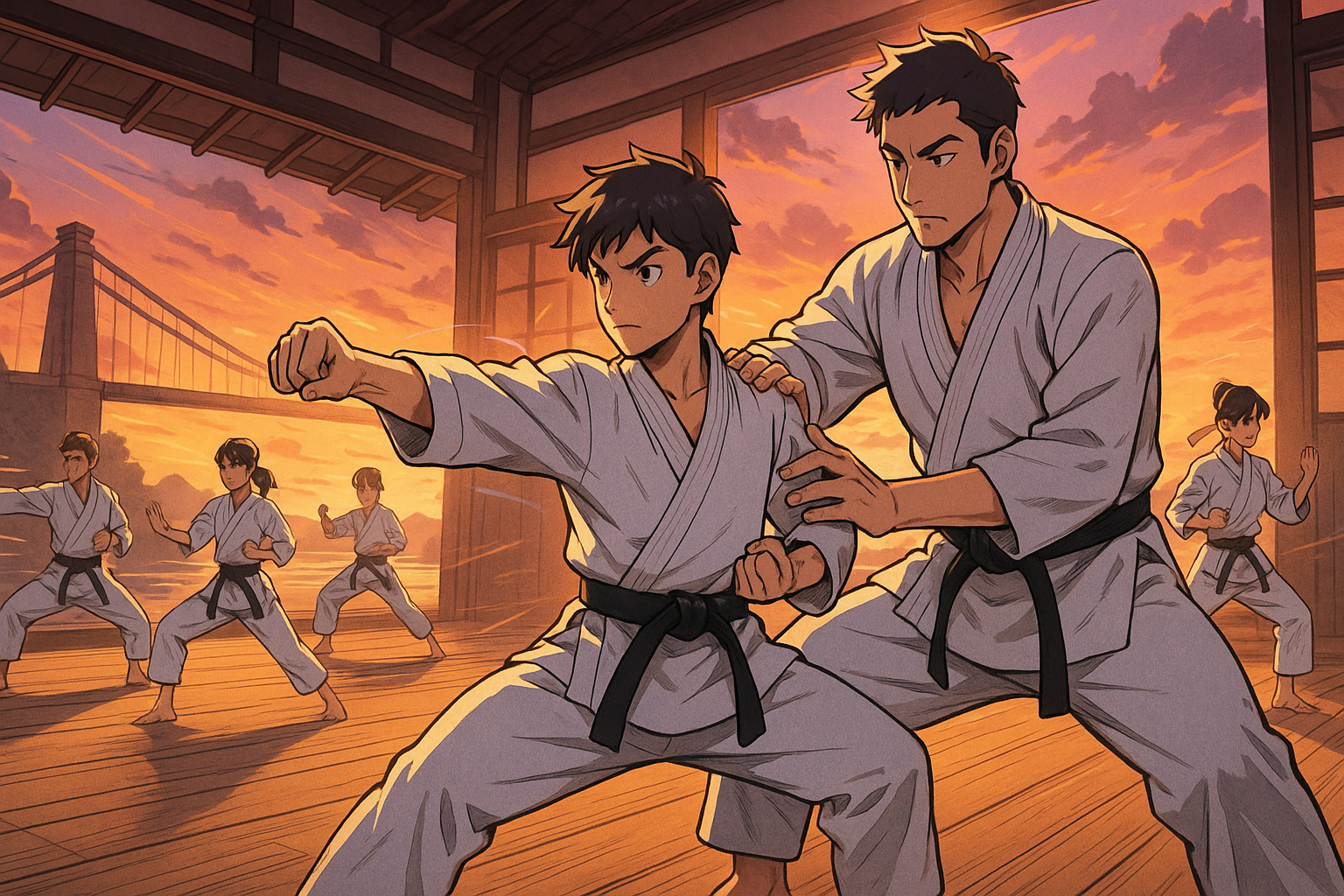
    Your transformation begins here, in the most deceptively powerful position in martial arts. Stand with your feet shoulder-width apart, knees slightly bent, weight evenly distributed across both legs. Your body should feel relaxed yet alert, like a cat preparing to pounce.

    This isn’t just standing – it’s controlled readiness. Professional fighters spend thousands of hours perfecting this “simple” position because it teaches you to find your centre whilst remaining completely mobile. Think of it as your martial arts GPS coordinates, the position you return to between techniques.

    Critical insight: Students who rush past natural stance never develop proper body mechanics. They might look impressive initially, but they plateau quickly and suffer more injuries than those who build solid foundations.

    Forward Stance (Zenkutsu dachi): The Powerhouse Generator

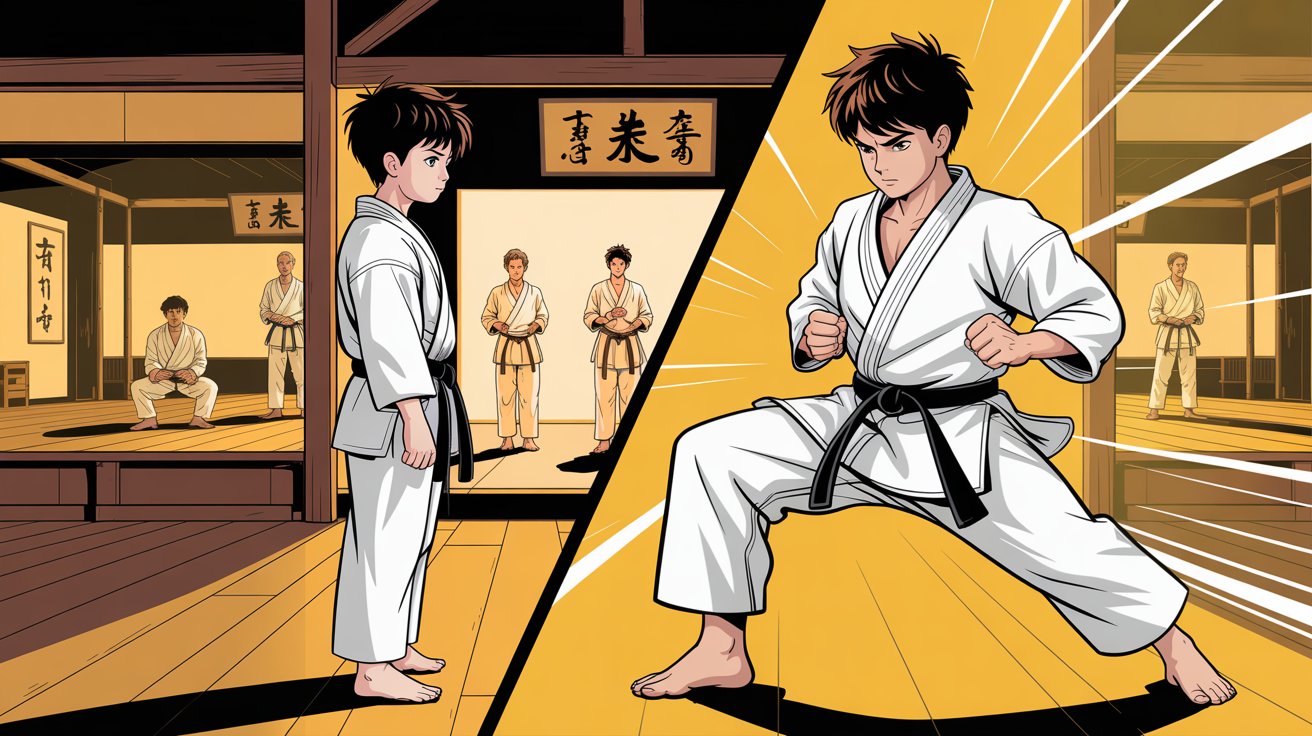
    Now we unleash your inner warrior. Step forward with your leading foot, bending the front knee until your thigh runs parallel to the ground. Your back leg remains straight and strong, creating a powerful platform for explosive techniques.

    This stance generates maximum forward momentum for strikes and blocks. When executed correctly, you should feel like a coiled spring ready to explode forward. Professional karate competitors generate up to 40% more striking power from proper forward stance compared to improper positioning.

    Training revelation: Many beginners make the fatal error of placing too much weight on their back foot. Remember this ratio: 70% front, 30% back. This distribution allows for lightning-fast transitions whilst maintaining devastating power.

    Horse Stance (Kiba dachi): The Leg-Burning Foundation Builder

    Prepare yourself for the ultimate test of willpower. Position your feet twice shoulder-width apart, toes pointing straight ahead, and sink down as if sitting on an invisible chair. Your thighs should be parallel to the floor, back perfectly straight, and your mind focused on enduring the burning sensation in your legs.

    This stance separates the committed from the casual. Elite martial artists can hold horse stance for 10+ minutes, building incredible leg strength and mental fortitude. Studies show that regular horse stance training improves overall balance by 60% within just eight weeks.

    Mental breakthrough: When your legs start shaking and your mind screams “quit,” you’re discovering the difference between physical limits and mental barriers. Push through this moment, and you’ll unlock a new level of personal resilience that extends far beyond martial arts.

    Cat Stance (Neko ashi dachi): The Deceptive Defender

    Elegance meets effectiveness in this sophisticated stance. Place almost all your weight on your back leg whilst barely touching your front foot to the ground. You should feel like a cat preparing to strike – balanced, fluid, and ready to explode into action.

    This position teaches you subtle weight distribution and prepares you for lightning-fast kicks with your unweighted front leg. Advanced practitioners use cat stance to confuse opponents about their intentions, appearing vulnerable whilst actually maintaining perfect defensive positioning.

    Back Stance (Kokutsu dachi): The Strategic Retreat Master

    The final essential stance teaches you that sometimes the best offence is a calculated defence. Position your feet in an “L” shape, with 70% of your weight on your back foot. This stance allows for instant retreating movements whilst maintaining perfect balance for counter-attacks.

    Professional self-defence instructors emphasise back stance as crucial for real-world situations. It creates distance from attackers whilst keeping you perfectly positioned to launch devastating counter-strikes when opportunities arise.

    Frequently Asked Questions About Karate Stances

    How long should I practise each stance daily? Dedicate 20-30 minutes daily to stance training, spending 3-5 minutes in each position. Quality trumps quantity – better to hold perfect stances for shorter periods than sloppy ones for extended time.

    Which stance should beginners master first? Start with natural stance and forward stance, as these form the foundation for 80% of basic techniques. Once comfortable, add horse stance for strength building, then progress to cat and back stances.

    How quickly will I see improvement? Most dedicated students notice improved balance and confidence within two weeks. However, true stance mastery requires 6-12 months of consistent practice. Remember, even black belts continue refining their fundamentals.

    Can improper stances cause injuries? Absolutely. Poor stance mechanics account for approximately 60% of karate training injuries, according to martial arts medical studies. Proper stances distribute forces correctly, protecting your joints and muscles.

    What’s the biggest mistake beginners make? Rushing through stance training to learn “exciting” techniques. Students who skip fundamental stance work plateau quickly and often develop bad habits that take years to correct.

    The Transformation That Awaits You

    Here’s what happens when you commit to mastering these five essential stances. Within weeks, you’ll notice improved posture in daily life. Your balance becomes unshakeable, your leg strength increases dramatically, and most importantly, your confidence grows exponentially.

    Professional martial artists understand a secret that casual students miss: stances aren’t just positions – they’re expressions of internal power and mental discipline. Each stance teaches specific lessons about balance, timing, and strategic positioning that apply far beyond the dojo.

    Moreover, students who dedicate themselves to stance mastery discover something remarkable. These seemingly simple positions become gateways to advanced techniques that once seemed impossible. Your kicks become more powerful, your blocks more effective, and your overall martial arts ability skyrockets.

    Your Dachi Journey From Zenkutsu to Kiba-Dachi & Beyond Starts Now

    The path from beginner to black belt doesn’t begin with flashy techniques or impressive demonstrations. It starts with a single decision to embrace the fundamentals that every great martial artist has mastered before you.

    These five stances represent more than physical positions – they’re your foundation for martial arts excellence, your building blocks for self-defence capability, and your pathway to the confidence and discipline that transform lives.

    The choice is yours. You can rush towards advanced techniques and join the 70% who quit within six months, or you can commit to mastering these essential stances and unlock your true martial arts potential.

    Start today. Choose one stance. Hold it for just one minute. Feel the burn, embrace the challenge, and take your first step towards martial arts mastery. Your future warrior self is waiting, and the journey begins with your very next breath.

    Additional Questions

    What are the common basic karate stances?

    Common basic karate stances include zenkutsu-dachi (front stance), kokutsu-dachi (back stance), kiba-dachi (horse stance), heiko-dachi (parallel stance), and musubi-dachi (ready stance). Each stance serves a specific purpose in the practice of karate, helping practitioners maintain balance, power, and readiness for techniques.

    How is the front stance (zenkutsu-dachi) used in karate?

    The front stance, or zenkutsu-dachi, is characterized by one foot being forward and the other foot behind, with the front knee bent at approximately 90 degrees. This stance is used to perform attacks and maintain a strong defensive position, allowing for effective movement and weight distribution.

    What is the purpose of the ready stance (musubi-dachi) in karate?

    The ready stance, musubi-dachi, is often used as a neutral stance to prepare for action. In this position, the feet are together, and the body is relaxed yet alert, allowing practitioners to quickly transition into different stances or techniques while keeping their center of mass balanced.

    Can you explain the shiko dachi stance?

    Shiko dachi, or horse stance, involves positioning the feet wider than shoulder-width apart, with the toes pointed outward. This stance is great for building leg strength and stability, and it is commonly used in kata and kumite practice for executing powerful techniques.

    What is the significance of practicing different stances in karate?

    Practicing different stances in karate enhances balance, power, and agility. Each stance, such as sanchin-dachi (hourglass stance) or kiba-dachi, allows for specific movements and techniques while helping practitioners develop a deeper understanding of body mechanics and footwork.

    How does the cross stance (kosa dachi) differ from other stances?

    The cross stance, or kosa dachi, involves crossing one foot in front of the other, creating a unique position that can be used for evasion and quick transitions. This stance is useful for avoiding attacks and can be incorporated into various karate styles, including Shotokan.

    What role does the crane stance (tsuru ashi dachi) play in karate?

    The crane stance, or tsuru ashi dachi, is a balance stance that involves standing on one leg while the opposite leg is lifted with the foot positioned near the knee. This stance is used in kata to enhance balance and focus, and it prepares practitioners for swift movements while maintaining stability.

    How do karate styles incorporate basic stances?

    Different karate styles, such as Shotokan and Goju-Ryu, incorporate basic stances like heiko-dachi and zenkutsu-dachi in their training. These stances are integral to kihon (basics) and kata, providing a foundation for effective technique execution and adaptability in kumite.

    What is the importance of keeping the back straight in stances?

    Keeping the back straight while in any karate stance is crucial for maintaining proper alignment and balance. A straight back helps keep the center of mass stable and allows for effective power generation in strikes, while also preventing injury during practice.

  • shotokan karate kata for beginners

    shotokan karate kata for beginners

    The Essential Shotokan Karate Katas Every Bristol Beginner Must Master (Plus the Secret to Perfect Form!)

    Key Points

    • Karate katas are choreographed sequences that teach fundamental techniques and principles
    • Bristol offers excellent dojos for beginners to learn traditional karate forms
    • Regular kata practice improves muscle memory, balance, and mental discipline
    • Each kata tells a story of combat against imaginary opponents
    • Proper breathing and timing are crucial for effective kata performance
    • Competition katas differ from traditional training forms
    • Most beginners can learn their first kata within 4-6 weeks of consistent practice

    Picture this: you’ve just walked into a Bristol karate dojo for the first time, watching experienced students move through what looks like an elaborate dance. Their movements flow with precision and power, each gesture deliberate and meaningful. You’re witnessing the ancient art of kata—and you’re about to discover why mastering these forms will transform your martial arts journey forever.

    What Exactly Are Karate Katas?

    Imagine learning to drive without ever getting behind the wheel. That’s what karate would be like without katas. These choreographed sequences of techniques serve as your martial arts textbook, teaching you everything from basic stances to advanced fighting combinations through structured movement patterns.

    Katas (pronounced “kah-tahs”) are pre-arranged forms that simulate combat scenarios against multiple imaginary opponents. Each movement has a specific purpose—whether it’s a block, strike, or throw. Think of them as your martial arts vocabulary lesson, where every technique you’ll ever need is embedded within these flowing sequences.

    Bristol’s karate community has embraced kata training for decades, with local dojos following traditional Japanese teaching methods whilst adapting to modern learning needs. The city’s martial arts heritage runs deep, making it an ideal place to begin your kata journey.

    Why Bristol Beginners Should Embrace Kata Training

    Your transformation begins the moment you start learning your first kata. Unlike random technique practice, katas provide structure and progression that builds your skills systematically. Research from the International Journal of Sports Science shows that structured movement patterns improve motor learning by 40% compared to isolated technique training.

    Bristol’s climate offers year-round training opportunities, and the city’s numerous dojos provide excellent environments for kata development. Local instructors often combine traditional Shotokan or Kyokushin approaches with contemporary teaching methods, making complex forms accessible to absolute beginners.

    The benefits extend far beyond physical technique. Regular kata practice develops:

    • Enhanced concentration and mental clarity
    • Improved cardiovascular fitness and flexibility
    • Better body awareness and coordination
    • Increased confidence and self-discipline
    • Cultural appreciation for Japanese martial arts traditions

    Your First Steps: Beginner-Friendly Katas

    Every martial arts hero starts with a single step—or in karate terms, your first kata. Most Bristol dojos begin students with Taikyoku Shodan or Heian Shodan, depending on their style. These foundational forms contain approximately 20-25 movements and can be learned within your first month of training.

    Taikyoku Shodan translates to “first cause” and focuses on basic blocks and punches in forward stance. It’s deliberately simple, allowing you to concentrate on proper posture and breathing without overwhelming complexity. The kata follows a straight-line pattern, making it perfect for spatial awareness development.

    Heian Shodan, meaning “peaceful mind first,” introduces turning movements and different stances. With 21 movements, it typically takes beginners 4-6 weeks to memorise completely. Bristol instructors often use visual cues and breaking down movements into smaller segments to accelerate learning.

    The secret lies in consistent daily practice, even if only for 10-15 minutes. Many successful Bristol karateka credit their rapid progress to home practice between dojo sessions.

    Common Beginner Challenges (And How to Overcome Them)

    Your journey won’t always be smooth sailing. Every Bristol beginner faces similar obstacles, but understanding these challenges beforehand gives you a significant advantage.

    Memory Confusion: Forgetting sequences is absolutely normal. Professional instructors recommend learning katas in small chunks—master 3-4 movements before adding more. Bristol’s Sensei Graham Williams from the city’s largest dojo suggests using the “mirror method”—practising movements whilst watching yourself to improve muscle memory retention.

    Timing and Rhythm: Katas aren’t just about getting movements right; they require proper timing and breathing coordination. Each technique should flow naturally into the next, creating a rhythmic pattern. Start slowly and gradually increase speed as movements become automatic.

    Stance Problems: Weak stances undermine everything else. Bristol beginners often struggle with maintaining low, stable positions throughout longer katas. Dedicate extra time to stance training—hold each position for 30-60 seconds during home practice.

    Mental Pressure: Performing katas in front of others can feel intimidating. Remember that every black belt in your Bristol dojo was once exactly where you are now. Focus on personal improvement rather than comparison with others.

    The Bristol Advantage: Local Resources and Community

    Bristol’s martial arts scene offers unique advantages for kata development. The city hosts regular workshops and seminars featuring visiting masters from Japan and other karate strongholds. These events provide invaluable learning opportunities beyond regular dojo training.

    Local competition opportunities abound, with the annual Bristol Karate Championships attracting participants from across the Southwest. Watching these competitions—even as a beginner—helps you understand kata applications and performance standards.

    Several Bristol dojos offer specialised kata classes, allowing deeper exploration of form applications and historical context. The University of Bristol’s sports facilities also provide additional training spaces for students and community members.

    Bristol’s multicultural environment means you’ll train alongside people from diverse backgrounds, creating a rich learning atmosphere where different perspectives enhance your understanding of traditional techniques.

    Advanced Applications: Where Katas Lead

    Your initial struggles with basic movements gradually transform into fluid, powerful expressions of martial arts principles. Advanced practitioners use katas for meditation, physical conditioning, and practical self-defence preparation.

    Bunkai—the practical application of kata movements—reveals hidden techniques within familiar forms. What initially appears as a simple block might actually be a joint lock or throw. This discovery process continues throughout your martial arts journey, with new insights emerging even after years of practice.

    Competition kata represents another pathway, where artistic expression meets technical precision. Bristol has produced several national-level kata competitors who started as complete beginners in local dojos.

    Some practitioners eventually teach others, finding that explaining katas deepens their own understanding. Bristol’s martial arts community actively supports instructor development, with several certification programmes available locally.

    Your Next Steps Forward to Train the Shotokan Kata

    Your transformation from curious observer to confident practitioner begins with a single decision: committing to regular practice. Bristol offers numerous high-quality dojos where you can start your kata journey immediately.

    Begin by visiting local dojos during their beginner-friendly sessions. Most Bristol schools offer trial classes or beginner courses specifically designed for newcomers. Don’t worry about purchasing expensive equipment initially—comfortable clothing and bare feet are sufficient for your first few sessions.

    Set realistic goals: learning your first complete kata within 4-6 weeks, achieving smooth performance within 3 months, and understanding basic applications within 6 months. These milestones provide motivation whilst acknowledging that mastery takes years, not months.

    Remember that every expert was once a beginner. Your current challenges—memorising sequences, maintaining stances, coordinating breathing—are temporary obstacles that consistent practice will overcome.

    The ancient wisdom embedded within karate katas awaits your discovery. Bristol’s vibrant martial arts community stands ready to guide your journey from uncertain beginner to confident practitioner. Your transformation starts now—the only question remaining is which dojo you’ll visit first to begin this incredible adventure.